Froshi's Ribbiting Cast of Characters

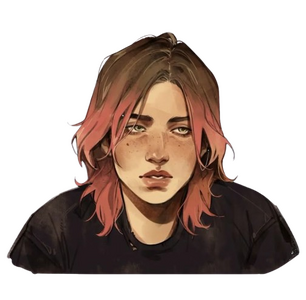
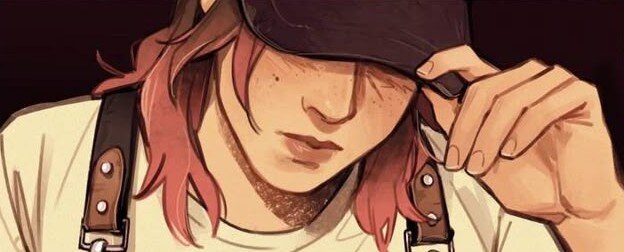
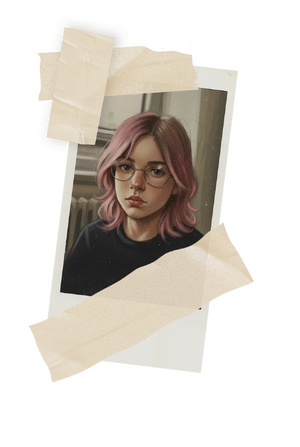
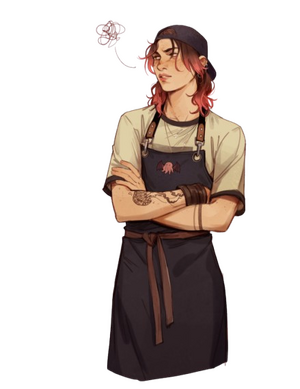
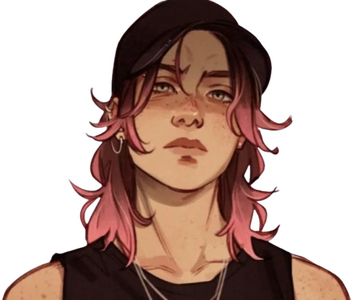
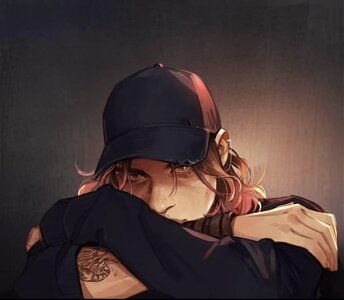
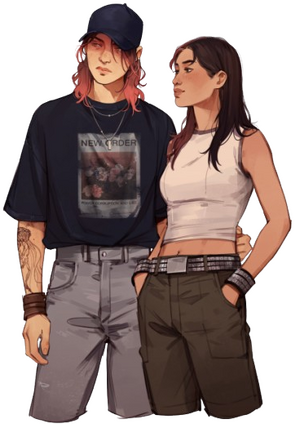
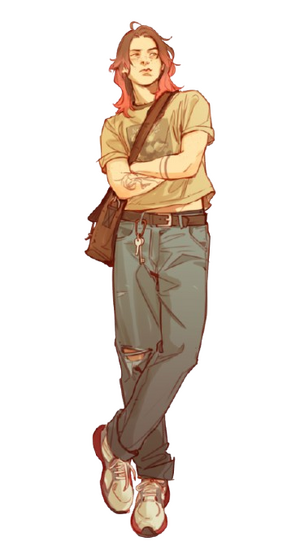
ROWAN CASTELLANOS
"WOODSMOKE"
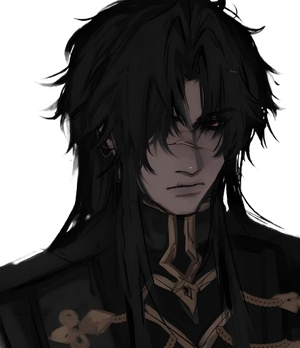
e2b9115124437501bccb5902bad7258e-removebg-preview.png


NAME → Rowan Castellanos
NICKNAMES → Ro / Woodsmoke
AGE → 26
BIRTHDATE → xxxx/03/15
GENDER → Non-binary (they/them)
HEIGHT/WEIGHT → 5'8" (173 cm) / 165 lbs (75 kg)
ORIENTATION → Pansexual
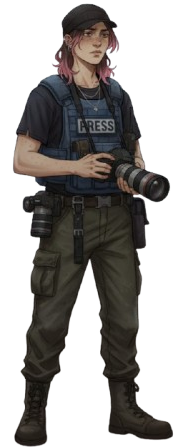
OCCUPATION → Travel photographer / journalist (former stringer)


PERSONALITY

Rowan is a gentle observer of the world, someone who notices the small things others miss—a stranger's tired smile, the way light falls through a window, the stories hidden in everyday moments. But beneath that softness lies someone haunted by what they've witnessed, perpetually exhausted in a way that sleep doesn't fix. They're a collector of stories and peace, always searching for proof that the world holds more beauty than horror. Running from their past has become second nature, always moving, never staying, choosing gentleness daily even when it's the harder path. They're soft-spoken and kind, but that kindness is a conscious choice made by someone who's seen too much of the alternative.
cateecheesite.wpengine.com_-removebg-preview.png

437724a4bf2c7c94effc0f72b9345da1.jpg

"I'm tired in a way sleep doesn't fix. But I'm still here, still shooting, still moving. That counts for something."

BACKGROUND
Early Memories
babyrow.pngRowan's first clear memory is of packing boxes. They must have been four, maybe five, sitting on the floor of their bedroom in - was it Georgia? Florida? - wrapping their toys in newspaper like their mother showed them. Their father was already at the new base, setting things up, and their mother was doing that thing she always did: smiling too bright, voice too cheerful, pretending this was an adventure and not another ending.
The military life meant Rowan never had a childhood home in the traditional sense. They had twelve different bedrooms before they turned eighteen. Twelve different schools. Twelve sets of temporary friends who promised to write and never did. Their mother tried to create consistency - the same flower-patterned curtains in every window, the same bedtime routine, the same songs - but even as a kid, Rowan could see the exhaustion behind her efforts.

Their father was Air Force through and through. Rigid. Disciplined. The kind of man who believed emotions were weaknesses to be managed, not expressed. He loved his family in his own way, but that way involved long absences, clipped phone calls from overseas bases, and expectations that Rowan was too young to understand. When he was home, he was physically present but mentally elsewhere, already planning the next deployment, the next move, the next mission that mattered more than soccer games or school plays.
Rowan learned early not to get attached. Not to places, not to people, not to the idea that anything was permanent.


The Collection Begins

It started in North Carolina, or maybe it was Virginia - the bases blurred together. Rowan was eight years old and about to move again, standing in their almost-empty bedroom, when they realized they couldn't remember what their last bedroom looked like. Not clearly. Not the way it actually was. The memory was already fading, becoming generic, just another room in just another house in just another place they'd left behind.
That's when they started documenting everything.

Polaroids became Rowan's obsession. They photographed every bedroom, every school, every route they walked. Movie ticket stubs got taped into notebooks with the date and location written underneath. Restaurant receipts. Bus tickets. Postcards from places they'd lived, not visited. If they could hold physical proof of a place, maybe it wouldn't completely disappear when they left.

Their mother thought it was sweet, this little hobby. Their father thought it was impractical - why waste money on film for places you're never going back to? But Rowan kept doing it anyway, building an archive of temporary homes, proof that they'd existed in all these places even if they'd never belonged in any of them.

They got good at being the new kid. Learned to read social dynamics quickly, figure out which groups might accept an outsider for a few months, which teachers to connect with, which parts of themselves to show and which to keep hidden. They became a chameleon by necessity, adapting to each new environment while never quite fitting into any of them.

Discovering Photography as Art

High school brought a different kind of clarity. Rowan was in their third high school in three years - somewhere in the mid-Atlantic, one of those bases that all looked the same - when they took their first real art class. The teacher, Mrs. Chen, was young and enthusiastic in a way that felt genuine rather than performed. She noticed things about her students that most teachers missed.

She noticed that Rowan's photographs were different from the other students'.

While their classmates photographed their friends, their pets, their families, Rowan's photos were full of absence. Empty playgrounds at dusk. Half-drunk coffee cups abandoned on benches. The last bit of sunset through chain-link fences. Parking lots after rain. Objects and places that spoke of people who'd been there and left.

"You have a gift for finding loneliness," Mrs. Chen told them once, and it didn't sound like a criticism. "That's rare. Most people look away from lonely things."

She gave Rowan her old Canon AE-1, a film camera that was probably worth more than Rowan's entire collection of disposable cameras and Polaroids. Said she wasn't using it anymore, that it deserved to be in the hands of someone who'd actually do something with it. Rowan cried in the darkroom later, developing their first roll of film from a real camera, understanding for the first time that all this moving, all this impermanence, could be turned into something that mattered.

Photography gave purpose to the rootlessness. If they were going to move every few years anyway, if they were going to see dozens of places most people never saw, maybe they could show people the beauty in things left behind. Maybe they could make the temporary permanent, at least in a frame.

The Divorce

Rowan's parents divorced during their first semester of college. Rowan was at a state school somewhere they didn't particularly want to be, studying something they didn't particularly care about, when they got the call from their mother. The marriage was over. Had been dying for years, really, killed slowly by deployment after deployment, absence after absence, the weight of a life spent waiting for someone who was never fully present even when he was home.

Rowan wasn't surprised. Honestly, they were more surprised it hadn't happened sooner.

What did surprise them was their own reaction. They felt nothing. Or maybe they felt too much and had gotten so good at shutting it down that it registered as nothing. Their roommate asked if they were okay, and Rowan said yes, and it wasn't quite a lie because they'd been preparing for this their whole life. Everything ends. Everyone leaves. This was just confirmation of what they already knew.

But something shifted in them that year. Some fundamental understanding about what their life had been and what it could be.


YOUNG ADULTHOOD: THE BREAKING YEARS
The Decision to Leave
tumblr_4dad13b8056cb63dfad2276369179275_e1b53e01_540-removebg-preview.pngRowan dropped out of college in their second semester. They'd been going through the motions - attending classes they didn't care about, pursuing a degree in journalism because it seemed practical, living in a dorm room that felt like all the other temporary rooms they'd inhabited. The divorce finalized right before winter break, and Rowan spent the holidays watching their mother try to rebuild a life in a small apartment, watching their father retreat further into his military identity like it was the only thing he had left.

During those cold December days, Rowan made a choice.

Their father's entire career had been about creating conflict around the world - or at least being part of the machine that did. Strategic operations. Military interventions. The kind of abstract policy decisions that had real, devastating consequences for real people whose names would never be known, whose stories would never be told.

Maybe Rowan could tell those stories. Document the human cost that got buried under politics and strategy. Show the people who became statistics.

It felt important in a way nothing else had felt important before.

They liquidated what was left of their college fund - not much, but enough - and bought camera equipment. Good equipment. Professional grade. Then they bought a one-way ticket to Istanbul, because Istanbul was close to Syria, and Syria was where the story was.

Their mother cried and begged them not to go. Their father called it irresponsible and naive. Their college advisor warned them they were throwing away their future.

Rowan went anyway.

Istanbul and the Beginning

Istanbul in 2018 was crowded with journalists, aid workers, and refugees. The Syrian civil war was in its seventh year, and the city had become a hub for everyone trying to get in or get out of the conflict. Rowan arrived with expensive camera equipment, minimal Arabic, and absolutely no idea what they were doing.unnamed__1_-removebg-preview.png

They spent the first month terrified and broke, staying in the cheapest hostels, eating once a day, trying to figure out how to actually break into conflict journalism when they had no credentials, no contacts, and no experience. They attended every journalism meetup they could find, hung around the cafes where foreign correspondents gathered, offered to work for free if anyone would just let them tag along.
Eventually, someone said yes.

A small independent news agency covering the refugee crisis needed someone willing to work for almost nothing. Rowan's job was basically to carry equipment and stay out of the way, but it was an in. They met fixers, translators, other young journalists who were equally naive and equally determined. They learned how to navigate the complex bureaucracy of covering a war zone, how to get the right permits, how to talk to the right people, how to stay safe(ish) while documenting unsafe things.

More importantly, they learned how to listen.

Rowan started documenting refugee families in Istanbul - people who'd made it out of Syria but were now stuck in limbo, waiting for asylum, waiting for family members, waiting for some kind of future to become possible. They photographed the waiting. The uncertainty. The small moments of normalcy people created in temporary situations - children playing in refugee camps, women cooking familiar foods with unfamiliar ingredients, men sitting in circles smoking and pretending everything was normal.

These photos got picked up by a few online publications. Nothing major, but enough that people started to notice Rowan's work. They had an eye for finding humanity in crisis, for showing people as people rather than as victims or statistics.

First Time in Syria

Rowan crossed into Syria for the first time three months after arriving in Istanbul. They went embedded with a journalist named Marcus, a South African videographer ten years older who'd been covering conflicts for years and seemed to know what he was doing. Marcus took Rowan under his wing, taught them how to read a situation, how to know when to film and when to put the camera down, how to navigate checkpoints without getting arrested or worse.

That first trip broke something in Rowan and rebuilt it differently.

They saw things they'd never imagined. Hospitals operating without supplies. Schools that had been bombed but were still holding classes in the rubble. Families living in buildings with no roofs, no walls, but still somehow living, still creating routines, still finding reasons to smile occasionally. They photographed a father teaching his daughter to ride a bicycle in a destroyed street, morning light filtering through the broken buildings behind them, and something about that image - the insistence on normalcy in the face of destruction - felt profoundly important.

They also saw bodies. So many bodies. Learned what death smelled like in the heat. Heard the sounds people make when they're injured, when they're dying, when they're finding their dead. Interviewed mothers who'd lost children and children who'd lost everyone. Watched colleagues break down crying and then keep filming anyway because the work mattered.

Rowan came back from that first trip changed. They'd always been quiet, observant, a little detached. Now they were haunted. But they were also certain, more certain than they'd ever been about anything, that this work mattered. That bearing witness mattered. That someone needed to document this so the world couldn't look away.

They went back. And back. And back.

The Three Years

For the next three years, Rowan lived primarily in conflict zones. Syria mostly, but also Yemen, then Ukraine. They stopped having a home base,cc5a223084683a64fa7861655c884f8a-removebg-preview.png stopped having anything that resembled a normal life. They'd spend weeks or months embedded in war zones, then a few days in Istanbul or Berlin or wherever they could find cheap accommodation to recover before going back.

The work consumed them entirely.

They stopped sleeping more than a few hours at a time. Lived on coffee and adrenaline and the desperate belief that if they could just capture one more story, show the world one more truth, maybe something would change. They documented everything - the violence, yes, but also the resilience. The mother singing to her child during an airstrike. The doctor operating by candlelight when the power went out. The kids who'd created games out of rubble and survival.

Their work got noticed. Publications started requesting them specifically. They won a Human Rights Press Award at 21 for the photograph of the father and daughter with the bicycle. They were becoming known as someone who could find humanity in horror.
But the work was destroying them.

Rowan watched Marcus die in Yemen, killed by shrapnel from a mortar attack. They photographed his body before they realized what they were doing, then deleted the photo and regretted it forever. They lost three colleagues in two years - killed, arrested, disappeared. They conducted interviews with people who were dead within days. They photographed scenes knowing they might be the last person to see these people alive.
The trauma accumulated. Rowan started having panic attacks they couldn't control. Started dissociating during regular moments - they'd lose time, suddenly realize hours had passed and they couldn't remember where they'd been. Started having nightmares so vivid they'd wake up screaming. Started flinching at sounds that used to be normal - doors slamming, cars backfiring, anything sudden and loud.

They kept going anyway. Because the work mattered. Because someone had to do it. Because stopping felt like giving up, like all the horror they'd witnessed would be for nothing if they didn't keep bearing witness.

The Aleppo Incident

The breaking point came in Aleppo.

Rowan was documenting a field hospital - one of the few still operating in the besieged city. They'd been there for two days, photographing the doctors who worked with no supplies, the patients who kept arriving, the impossible triage decisions being made every hour. They were in the basement developing some film - yes, still shooting film sometimes, because digital felt too cold for this work - when they heard the sound.
That particular whistle that meant incoming. That meant get down, get small, get anywhere but here.

The airstrike hit directly above them.

Rowan doesn't remember the impact. One moment they were standing in the darkroom, and the next they were on the floor in complete darkness, ears ringing so loud it felt like their skull was splitting, unable to breathe because the air was full of dust and smoke and pulverized concrete.
The building had collapsed. They were trapped in the basement with three doctors and a handful of patients. No way out. No light except for someone's phone that was somehow still working. No way to know if anyone above them was alive or dead. No way to know if rescue would come or if this basement would just become their tomb.

Six hours. They were trapped for six hours.

In those six hours, Rowan listened to people screaming in other parts of the rubble. Heard the sounds of secondary explosions. Heard the awful silence that came after. Felt the weight of all the concrete above them, felt how easily it could shift and crush them all. One of the doctors had a broken leg. A patient was going into shock. Everyone was injured. Everyone was terrified. And there was nothing any of them could do except wait and hope.

When rescue workers finally dug them out, Rowan's first instinct was muscle memory. Raise the camera. Document the scene. Show the world what happened here.

But their hands were shaking so badly they dropped the camera. It shattered on the rubble. And in that moment - covered in dust that might have been concrete or might have been the remains of people who'd been above them, ears still ringing, watching a doctor try to save a child with no supplies and no hope - something in Rowan broke completely.

They'd been doing this for three years. They'd photographed hundreds of scenes exactly like this one. Published them. Won awards for them. And none of it had stopped this from happening again. None of it had changed anything. The work they'd thought mattered, the bearing witness they'd thought would make a difference - it was all just documentation of suffering that would continue regardless.

Rowan walked away from the rubble. Found a way to the Turkish border. Got on the first flight to Berlin. Didn't stop until they were as far from conflict zones as they could get.

They never went back.

RECONSTRUCTION: THE BERLIN MONTHS

7889c16839ef5fffff6b134c5e37c36f.jpg


The Breakdown
Berlin was supposed to be a break. A week, maybe two, to catch their breath and figure out what came next.

It turned into six months of barely leaving a sublet apartment in Kreuzberg.

Rowan was not functional. They couldn't sleep more than an hour or two without nightmares that left them gasping and disoriented. When they did sleep, they slept sixteen hours straight, their body shutting down from exhaustion it had been ignoring for years. They couldn't eat - everything tasted like ash and dust. They couldn't look at their camera. They couldn't look at the external hard drive with all their wartime photos. They couldn't do much of anything except exist in this apartment that felt both too big and too small.

The panic attacks were constant. A car would backfire outside and Rowan would be on the floor, hands over their head, waiting for the impact. Someone would slam a door and their heart would start racing, chest constricting, unable to breathe. They'd go to buy groceries and the crowded store would become unbearable, too many people, too many potential threats, too many exits to track.

They stopped answering messages. Stopped checking email. Their phone was full of missed calls from their mother, from former colleagues, from editors wanting to know when they'd be available for the next assignment. Rowan ignored all of it.

For three months, they were barely a person. Just a collection of trauma responses housed in a body that wouldn't stop reminding them of everything they'd survived.

Dr. Vogler

In month four, Rowan's mother somehow tracked them down - probably through the hostel Rowan had initially stayed at before finding the sublet. She didn't visit, but she did something worse: she made Rowan promise to see a therapist. Just try it. Just once. Please.

Rowan went because their mother's voice on the phone had sounded so scared, and they'd caused her enough worry over the years.
Dr. Vogler's office was in a quiet part of Berlin, the kind of neighborhood that felt worlds away from war zones. She was probably in her fifties, with gray hair and kind eyes and that particular quality of patience that good therapists have. She didn't push. Didn't demand explanations. Just asked small questions and listened to Rowan's halting, inadequate answers.

"What brought you to Berlin?"

"I needed to leave where I was."
"Do you want to talk about where you were?"
"Not really."
"That's okay. What did you do today?"
"Nothing. Stayed inside."
"What would you like to do tomorrow?"
"I don't know."

It went like that for weeks. Small questions. Small goals. Today, just open the curtains. Tomorrow, maybe walk around the block. Next week, try to eat one meal out. Baby steps toward being a person again.

Dr. Vogler was the one who suggested Rowan try photographing something. Not war zones, not trauma - just something. Anything. A tree outside the window. The light on the wall. Proof that they could still see beauty, still create, still be the photographer they'd been before they'd become the photographer who documented horror.

Rowan tried. Their hands shook too badly to hold the camera steady.

"That's okay too. Try again tomorrow."


A Chance Meeting

During their Berlin breakdown period, Dr. Vogler assigned small, manageable homework to practice existing in public spaces. One afternoon's assignment was simple: visit a flea market. Notice three things. Use grounding techniques. Don't stay long, just go.

Rowan made it through about twenty minutes before glass bottles fell at a vendor stall two tables over. Not breaking, just falling. A completely mundane accident that sent Rowan into a full panic attack. Their body couldn't distinguish between bottles hitting concrete in a peaceful Berlin market and the sounds that used to mean incoming. They fled - not toward any planned exit, just away - and ended up stumbling into a convention center while mid-breakdown, seeking any escape from having a meltdown in public view.

The convention was worse. Crowds, competing music sources, flashing lights, hundreds of people in elaborate costumes - more sensory input than Rowan's shot nervous system could process. Their vision tunneled. They couldn't breathe right. The chaos felt like danger, like they needed to find cover, like something was about to go very wrong. They found a wall in a rest area, pressed their back against solid concrete, and tried to remember Dr. Vogler's breathing technique. In for four. Hold for four. Out for six. It took several minutes before their hands stopped shaking enough to press flat against the wall.

That's when they noticed him.

A man in his mid-twenties, maybe ten feet away, wearing an elaborate costume - all black with silver chain details, the kind of craftsmanship that spoke to what might have been months of careful work. He was on his phone, taking a break, not performing for anyone. Something about the costume's construction cut through Rowan's panic. Gave them something concrete to focus on that wasn't their own breakdown. The embroidery. The fabric layering. The way light caught the silver chains.

For the first time in months, Rowan wanted to photograph something.

They approached him - still shaky, still recovering from the panic attack, definitely not at their most articulate - and asked if they could take his photo. The man - Dmitri, he introduced himself - agreed immediately, shifting into what was clearly a practiced performance mode. He suggested moving upstairs where the lighting was better and there were fewer people. Rowan followed, grateful for the quieter space, grateful that he hadn't asked questions about why they looked like they'd just run from something.

On the upper balcony, Rowan pulled out their Canon 5D Mark IV. They'd been carrying it for months like a talisman but barely using it. The weight felt both familiar and foreign. They took a test shot and immediately recognized Dmitri's expression - that trained, professional smile. The kind people wore when they wanted you to see exactly what they wanted you to see and nothing more.

Rowan knew that smile. Had photographed a thousand variations of it.

"You don't have to do the Prince thing," they said, lowering the camera. "I photograph people. Not costumes. The costume's incredible, but it's the person wearing it that makes it interesting."

They didn't know if Dmitri would understand what they meant. Didn't know if he'd drop the performance or keep it up. But something about him - the way he'd stopped Rowan from walking away earlier, the gentleness in that gesture, the fact that he'd suggested somewhere quieter without being asked - made Rowan think there might be something real underneath all that honey-sweet charm.
Elena
Rowan met Elena in a coffee shop in month five. They'd been forcing themselves to leave the apartment more, following Dr. Vogler's suggestions,tumblr_fb29dd1e7e2804685d468da843899193_80a5c6a6_540__1_-removebg-preview.png trying to exist in the world again. The coffee shop was quiet, mostly locals, the kind of place where you could sit for hours without anyone bothering you.

Elena was a grad student studying architecture, specifically post-war reconstruction - the bitter irony of which was not lost on Rowan. She noticed them sitting alone day after day, always at the same corner table, always with untouched coffee and a camera they never used.
One day she just sat down across from them.

"You're always here." Not accusatory, just observational.

"Is that weird?" Rowan asked.
"No. I'm always here too. Seemed wasteful to sit at separate tables."

She talked about her thesis - rebuilding cities after conflict, how architecture could help communities heal, the balance between preserving history and creating new futures. She talked about Berlin specifically, a city that had rebuilt itself multiple times, that wore its scars as part of its identity.
Rowan found themselves talking back. Not about where they'd been or what they'd done, but about other things. Photography. Travel. The weird particular loneliness of being far from anywhere you could call home.

Elena started showing up at the same time as Rowan. They'd sit together, sometimes talking, sometimes working in comfortable silence. She asked about the camera Rowan carried everywhere but never used. When Rowan said "I used to be a photographer," she just nodded and said "You still are. You're just resting."


Something about her was easy. She didn't demand explanations. Didn't try to fix Rowan. Just existed alongside them in a way that felt manageable.
Over the next two months, it became something more. Not quite dating - neither of them called it that - but more than friendship. Elena would drag Rowan to museums, insisting they needed to see the architecture, and Rowan would go and find themselves actually looking at things, actually being present. They'd cook together in Elena's small kitchen, and Rowan would discover they could eat again, could taste things again. They'd fall asleep on Elena's couch watching bad German television, and Rowan would sleep through the night without nightmares, or at least without nightmares bad enough to wake them screaming.

For a while, Rowan felt almost human again.

An Unfortunate Ending

It ended because Rowan couldn't let it continue.

Elena invited them to dinner with her parents. Just dinner, nothing serious, but the way she asked - hopeful, nervous, like this meant something - triggered every panic response Rowan had been managing to keep at bay.

Meeting parents meant future. Future meant commitment. Commitment meant staying. And Rowan couldn't stay. Had never been able to stay. Didn't know how to be a person who stayed when their entire life had taught them that everything was temporary, everyone left eventually, and the only control you had was being the one who left first.

They tried to explain this to Elena. Tried to make her understand that it wasn't about her, it was about Rowan being broken in ways that couldn't be fixed, being someone who couldn't give her what she deserved, someone who would inevitably hurt her worse if they stayed longer.

Elena said she didn't care. Said they could figure it out together. Said Rowan didn't have to be perfect, they just had to try.

Rowan left Berlin two days later without saying goodbye. Just a note: "I'm sorry. You deserve someone who can stay. Thank you for being kind when I needed it."

They never forgave themselves for it. Still haven't.


THE WANDERING YEARS
Learning to Photograph Peace
After Berlin, Rowan went to Portugal. Then Morocco. Then Thailand. They moved constantly, never staying anywhere longer than a few months, building a new life that looked nothing like the old one.

Relearning photography was harder than they'd expected. For months, every time they raised their camera, their hands would shake. They'd see the scene in front of them - a beautiful sunset, a street vendor, a child playing - and their brain would overlay it with memories of other scenes through a viewfinder. Blood. Rubble. Bodies. Grief captured and frozen in frames that would never stop existing.

In Portugal, they forced themselves to shoot one roll of film per day. Didn't matter what. Just had to be something that wasn't horrible. Most of those early photos were terrible - out of focus, poorly composed, meaningless. But slowly, frame by frame, day by day, they started reclaiming the camera as a tool for beauty instead of a weapon for documenting atrocity.

They developed a new focus: everyday peace. The ordinary moments that people took for granted in places without war. They photographed:

  • Old craftspeople keeping dying traditions alive
  • Street musicians in small towns
  • Market vendors arranging produce with careful artistry
  • Children playing ancient games
  • Couples holding hands in public squares
  • Sunrises over unfamiliar cities
  • The way light fell through windows in different countries
  • Empty streets in early morning when everything felt possible

It wasn't the kind of work that won awards or changed policy. But it proved to them, daily, that the world contained more gentleness than violence. That there were stories worth telling that didn't require anyone to suffer.

Some days they believed it. Some days they were just going through the motions. But they kept shooting, kept moving, kept collecting evidence that peace existed.

The Messages They Don't Answer

Every few months, the messages come:
  • From their old agency: "We have an assignment in [conflict zone]. Interested? Your rate plus hazard pay." From former colleagues: "Hey, we're covering [crisis]. Could use someone with your eye. You coming back?" From editors: "Your Aleppo work was incredible. When can you pitch us something new?" From awards committees: "We'd love to honor your contribution to conflict photography."
  • Rowan reads every message. Never responds. Deletes some, archives others, but never replies.
  • The requests used to come weekly. Now they're every few months. The industry is moving on without them, and that's what they wanted. Isn't it?
  • The hardest messages are from Ahmed, their old fixer in Syria. He sends occasional updates: "The family from your photograph made it to Jordan." "Remember the doctor? Still working." "The cat from our building had kittens."
  • Ahmed never asks Rowan to come back. Never asks why they left. Just sends proof that life continues, that the people in Rowan's photographs are still people, still living.
  • Those messages get saved. Rowan doesn't respond, but they read them over and over. Sometimes they cry. Sometimes they just stare at their phone, thinking about the weight of bearing witness versus the weight of walking away.

Current Life
tumblr_a542e8b33425dfab8e2198f2069059a5_c60e0e55_1280-removebg-preview.png


Rowan is still moving. Still can't stay anywhere longer than a few months. Still documents peaceful moments and small beautiful things. Still flinches at loud noises. Still wakes up from nightmares they won't talk about. Still carries the external hard drive with 50,000 photos they can't look at and can't delete.


They've built a life around motion. Train journeys instead of flights. Hostels and sublets and temporary rooms. New cities where nobody knows what they used to do. Strangers who want to talk, whose stories they can collect and carry with them.

It's not the life they imagined when they were nineteen and full of righteous purpose. It's not the life that changes the world or saves anyone. But it's a life that lets them survive, and some days that has to be enough.

They're learning, slowly, that running toward peaceful things might be its own kind of courage. That documenting beauty is its own kind of witnessing. That survival counts for something, even when it feels like giving up.

Their work now asks: "What beauty persists?" instead of "What horror exists?"

It's a quieter question. A gentler one. And maybe that's the point.


LIST OF SKILLS

Conflict Zone Photography → Rowan knows how to work in dangerous, high-pressure situations. They can read a dangerous situation quickly and have instincts for self-preservation that were learned the hard way. They don't practice this anymore, but the skills are still there, muscle memory they can't forget.
Documentary Photography → They have an eye for honest, raw moments—the kind that tell a whole story in a single frame. These days they focus on street photography, cultural documentation, and human interest stories about ordinary life. The quiet stuff. The peaceful stuff.
Interview Techniques → Rowan learned how to make traumatized people comfortable enough to share their stories. They know how to ask difficult questions gently, how to listen without judgment, and when to just sit in silence and let someone process. Those skills translate to talking with anyone, really. People open up to them.
Languages → Spanish (fluent—their mom's first language), Arabic (conversational—learned in Syria), Kurdish (enough to get by), German (conversational—improved during their Berlin breakdown), Thai (conversational—from six months in Chiang Mai), French (basic—high school classes actually stuck). They pick up new phrases everywhere they go, collecting languages like souvenirs.
Crisis Management → Rowan knows basic field first aid, how to navigate military checkpoints, how to read when a situation is about to go bad, how to talk their way out of trouble. They hope they never have to use these skills again, but they're still there.
Navigation → They can read physical maps, navigate any public transit system, and have a weird sixth sense for direction. They prefer paper maps to GPS—something about digital navigation feels too sterile, too military. There's poetry in getting a little bit lost.
Active Listening → People tell Rowan things. Strangers on trains, cafe owners, other travelers. They have this quiet, non-judgmental presence that makes people feel safe sharing their stories. Maybe it's because Rowan has heard so many stories already. Maybe it's because they actually care. Probably both.
Cultural Adaptability → Years of moving as a kid plus years of traveling as an adult means Rowan can blend into new places quickly. They pick up on social customs, show respect for local traditions, and generally know how to not be That Tourist.

TRIVIA

→ Always carries at least three pens (two black, one colored) and a pocket-sized Moleskine notebook. Old habit from field journalism where you never knew when you'd need to take notes and couldn't rely on phone batteries.
→ Drinks coffee constantly. Hot, cold, instant, espresso, gas station sludge—doesn't matter. Started in war zones where staying alert could save your life. Now it's just how they function. They forget about cups constantly and end up drinking cold coffee, which doesn't bother them at all.
→ Has terrible timing. Misses trains and buses regularly. Sometimes it's because they lose track of time talking to someone or taking photos. Sometimes it's dissociation—they'll zone out and suddenly twenty minutes have passed. Sometimes it's subconscious avoidance—not wanting to arrive at the next temporary place.
→ Keeps a shoebox at their friend Marcus's place in Seattle (different Marcus, not the one who died) full of mementos from peaceful travels. Ticket stubs, pressed flowers, business cards with strangers' stories written on the back, handwritten notes in languages they don't speak, receipts from good meals. Nothing from war zones makes it into the box.
→ Texts in all lowercase with minimal punctuation. Writes long, thoughtful letters by hand but rarely sends them. Writing helps them process things they can't say out loud. Their journal is sacred—no one gets to read it.
→ Has a recurring dream about a house with blue shutters. They've never seen it in real life, but in the dream it's theirs, and they're allowed to stay as long as they want. They wake up from that dream feeling sad in a way they can't quite explain.
→ Can't keep plants alive. Every single one they've tried to care for has died within a month. They've given up trying. (You can't save everything, learned that lesson already.)
→ Prefers trains to planes by a huge margin. Trains feel gentle, grounded, like travel can be peaceful. You can watch the landscape change gradually. Planes remind them of emergency evacuations, of leaving places in a hurry, of journalists scrambling to get out before borders closed.
→ Flinches at sudden loud noises. Car backfires sound like gunfire. Fireworks sound like mortars. Doors slamming make their heart race. They play it off as being startled, and most people buy it.
→ Sleeps with white noise or rain sounds playing. Silence is too heavy, too much like waiting for something bad to happen. The noise helps, sort of. They still don't sleep well.
→ Has an external hard drive with what easily over 1TB of photos and videos from their wartime journalism days. Password-protected. Haven't opened it in four years. Can't bring themselves to delete it—those photos and videos are evidence, proof those moments happened, that those people's stories mattered. But they can't look at them either. The drive rests at the bottom of his camera bag, swaddled in a bloodied T-shirt—his own private relic, proof that some things can’t be cleaned, only carried.
→ Gets occasional messages from their old news agency, former colleagues, editors—people asking if they want to come back, if they're ready for another assignment, if they'll cover the next crisis. Rowan reads every message. Never responds. The requests used to come weekly. Now it's every few months. The industry is moving on without them.
→ Their old fixer from Syria, Ahmed, sends updates sometimes. Just small stuff: "The family from your photograph made it to Jordan." "The doctor you photographed is still working." "Remember that orange cat? Had kittens." Ahmed never asks Rowan to come back or why they left. Just sends proof that life continues, that the people in Rowan's photos are still people, still living. Those messages get saved. Rowan doesn't respond, but they read them over and over.
→ Won a Human Rights Press Award at 21 for a photo they took in Aleppo. Never attended the ceremony. Never told anyone about it. The physical award is in a storage unit in Istanbul with other things they left behind. They can't look at it without feeling sick.
→ Knows seven different ways to say "I'm sorry for your loss" but has never found a language where it feels like enough.


LIKES

+ train journeys + handwritten postcards + coffee shops with character and history + people-watching from corner tables + peaceful moments + sunrise photography (feels like proof of new beginnings) + physical maps + collecting stories that don't hurt + worn leather jackets + the smell of old books + jazz playing quietly in bars + small proof that beauty exists + strangers who want to talk + places where nobody knows what they used to do +


DISLIKES

- video calls (voice or in-person is better) - putting down roots anywhere - being asked "where are you from?" (don't have a good answer) - airports (too chaotic, too many bad memories) - sudden loud noises - fireworks (sound too much like mortars) - news coverage of current conflict zones (can't watch it anymore) - people who romanticize war photography - the question "why did you stop?" (because they broke, that's why) - pressure to go back (never going back) - well-meaning people who say "you could make such a difference" (tried that, it didn't work) - their own reflection on bad days -

Used In

ℂ𝕒𝕟𝕕𝕚𝕕 ℂ𝕠𝕞𝕡𝕠𝕤𝕚𝕥𝕚𝕠𝕟𝕤 (Active) | ɴᴏᴡʜᴇʀᴇ ᴛʀᴀɪɴ (Not Started)
 
Last edited:
⚠️ Work in Progress ⚠️


BASIC INFORMATION


NAME → Nakamura Kenji "Kenny"
NICKNAMES → Midnight / Kenny
AGE → 24
BIRTHDATE → xxxx/10/31
GENDER → Cis-male (he/him)
HEIGHT/WEIGHT → 5'8" (173 cm) / 145 lbs (66 kg)
SEXUAL ORIENTATION → Bisexual
OCCUPATION → Literary magazine editor / Aspiring novelist (perpetually unpublished)

PERSONALITY TRAITS


. Organized Chaos Incarnate . Chronic Procrastinator . Melancholic Romantic . Overthinker™ . Passionate About Art . Impulsive Shopper . Night Owl . Living in His Head .

PERSONALITY DESCRIPTION


Kenny is organized chaos incarnate—his life is a beautiful contradiction of color-coded calendars and dishes in the sink for three days. He's a chronic procrastinator who overthinks everything, a melancholic romantic who feels things too deeply and falls in love too easily. Passionate about art in all its forms, he can talk for hours about symbolism in films or the perfect sad song for any mood. An impulsive shopper who buys books faster than he reads them and stationery too pretty to use. A night owl who lives half in reality and half in the stories playing out in his head, always thinking about writing instead of actually writing. He's an introvert who craves deep connection but struggles to finish what he starts, terrified that his potential will never live up to reality.

BACKGROUND

Kenny grew up in Seattle as the family weirdo. Not in a fun quirky way either—in the "why can't you just be normal" way that made family dinners awkward. His parents were both accountants who met at a tax seminar, which Kenny still thinks is the least romantic origin story imaginable. His older brother Ryan became a software engineer at Amazon. Everyone in the Nakamura household valued practical things: spreadsheets, 401ks, sensible career paths that came with health insurance.

And then there was Kenny, writing fantasy stories in the margins of his math homework and spending lunch money on used books from the shop down the street.

His mom would find him at 2 AM reading by flashlight under his covers and sigh in that particular way that meant disappointment without words. His dad kept asking when he'd pick a "real major" instead of English Literature. Ryan would ruffle his hair and say "you'll grow out of it" like being creative was a phase, like teenage acne.

Kenny didn't grow out of it.

Books were his escape from a house that felt too clean, too organized, too focused on tax brackets and retirement planning. He read everything he could get his hands on—Murakami, Plath, Wilde, Morrison, Gaiman. In those pages, he found people who felt things as deeply as he did, who saw beauty in sadness and meaning in small moments. People who understood that life was more than just getting a good job and buying a house in the suburbs.

High school was when Kenny started becoming himself for real. Discovered indie music and thrift stores and that dressing in all black actually made him feel more comfortable in his own skin. Started going to open mic nights at coffee shops, wrote terrible poetry about existential dread, made friends with other artistic kids who didn't fit into neat boxes. His parents called it a phase. Kenny called it finally breathing.

He also figured out he liked guys sometime around sophomore year. Well, he liked girls too, but also guys, and that took a minute to process in a household that barely acknowledged emotions, let alone sexuality. He never made a big announcement about it—just started bringing both boyfriends and girlfriends to school events and waited to see if anyone said anything. His parents pretended not to notice for a solid year before his mom finally asked in the most awkward way possible if he was "seeing someone special" without specifying gender. Progress, he guessed.

Kenny left for Portland the day after high school graduation. Didn't even stick around for the summer. Just packed everything he owned into two suitcases and a backpack and took the train south to start college at Portland State. English Lit major, Creative Writing minor, and for the first time in his life, Kenny felt like he was exactly where he was supposed to be.

College was where everything clicked. He found his people—other writers, artists, musicians, the kind of people who'd stay up until 4 AM in a diner arguing about whether Gatsby ever really loved Daisy or if he just loved the idea of her. People who understood that analyzing the symbolism in a Hitchcock film wasn't pretentious, it was just how you experienced art. People who got it.

Kenny wrote constantly during college. Filled journal after journal with observations, story ideas, character sketches, bits of dialogue overheard on the bus. Started three different novels, finished none of them, but that was fine because he was learning, right? Figuring out his voice. That's what his professors said, anyway.

After graduation, Kenny landed an editorial job at Tidewater Literary Review, a small but respected magazine in Portland. It wasn't the dream—the dream was publishing his own novel—but it paid rent (barely) and kept him in the literary world. He got to read submissions, work with writers, attend local author events. It was adjacent to the dream, which was close enough for now.

That was three years ago.

Kenny still works at Tidewater. Still lives in the same studio apartment with plants covering every surface and books stacked in precarious towers against every wall. Still hasn't finished a novel. He's started seven. Seven. The first manuscript sits at 60,000 words, abandoned because he convinced himself the voice was all wrong. The second one is outlined in excruciating detail—character arcs, plot points, thematic elements all mapped out—but only three chapters are actually written. The third is currently at 15,000 words and growing... slowly... when Kenny isn't procrastinating by reorganizing his bookshelves or making new playlists or researching 1920s fashion for a scene he hasn't written yet.

The thing is, Kenny is terrified. Terrified that if he actually finishes something, it'll be bad. That all this potential he's been carrying around will turn out to be nothing. That his parents were right and he should've picked something practical. It's safer to be full of promise than to risk failure, you know? Safer to have seven unfinished novels than one finished novel that gets rejected by every agent in New York.

His apartment reflects his internal state pretty accurately. Books everywhere, organized by a system only he understands (fiction by mood, nonfiction by color, poetry by how much it makes him want to cry). Three different journals going simultaneously—one for diary entries, one for story ideas, one for quotes and observations. Plants covering every available surface on the windowsills—succulents, ferns, ivy, a fiddle leaf fig that's somehow thriving despite the Portland rain and his erratic schedule. Ironically, his plants are doing better than he is. He talks to them, remembers to water them, moves them to catch the best light. They're the one thing in his life he hasn't abandoned or let die from neglect. String lights and polaroids covering the walls. A "writing corner" with a vintage desk he found at Goodwill, perfectly curated with a typewriter (doesn't work but looks aesthetic) and good lighting and inspirational quotes pinned to a corkboard. He does most of his actual writing at 2 AM in bed on his laptop, but the writing corner looks great in photos.

Kenny is a walking contradiction. He's incredibly organized about some things—color-coded calendars, detailed outlines, alphabetized bookshelves—and completely chaotic about others—laundry on the floor, dishes in the sink for three days, important documents lost in piles of paper. He's an introvert who craves deep connection. A night owl who hates mornings with a burning passion. A perfectionist who procrastinates because if you never finish something, it can't be judged as imperfect.

He's also deeply romantic in the old-fashioned sense. He believes in handwritten letters and long walks in the rain and finding meaning in small moments. He falls in love easily—with people, with books, with songs, with the way light hits rain-soaked pavement. He feels everything intensely, which is great for writing but exhausting for living. His relationships tend to burn bright and fast, usually with other creative types who match his intensity until they don't, and then it's all dramatic breakups and sad playlists for three months.

His parents still don't get it. Still ask when he's going to "do something" with his English degree, as if editing a literary magazine doesn't count. Ryan sends him job postings for technical writing positions with "better benefits" like Kenny is going to suddenly abandon everything and write software documentation. He's mostly given up trying to explain that he's doing exactly what he wants to be doing, even if it doesn't come with a 401k match.

The truth is, Kenny is scared he's running out of time. Twenty-four isn't old, but it feels old when you're surrounded by writers who published their debut novels at twenty-two. When your social media feed is full of people your age getting book deals and literary agent representation and glowing reviews. Kenny knows comparison is the thief of joy and all that, but it's hard not to feel like he's falling behind, like all this potential is going to curdle into regret if he doesn't actually do something soon.

But doing something means finishing something. And finishing something means it can be bad. And if it's bad, then what? Then he's just another failed writer working an editorial job and living in a studio apartment with thriving plants and unfinished manuscripts.

So Kenny keeps procrastinating. Keeps starting new projects instead of finishing old ones. Keeps making playlists and researching and outlining and telling himself he'll really buckle down and finish this one, for real this time.

Tomorrow. He'll definitely start tomorrow.


LIST OF SKILLS

Editorial Eye → Kenny can spot a typo from across a room. He's excellent at structural editing, understanding narrative pacing, identifying weak character motivation, all that technical writing stuff. Ironically, he's way better at editing other people's work than his own. Can't see his own plot holes to save his life.
Literary Knowledge → Walking encyclopedia of books, authors, literary movements, and publishing industry gossip. Can recommend the perfect book for any mood. Has read everything from classical literature to contemporary fiction to obscure experimental poetry. His coworkers constantly ask for reading recommendations.
Analytical Viewing → Watches movies and TV shows like they're literary texts. Notices symbolism, themes, color palettes, narrative structure, all of it. Can and will talk for two hours about why a particular scene in a film matters. Has definitely ruined movies for friends by pointing out stuff they can't unsee.
Music Curation → Has playlists for every possible mood, emotion, and writing project. His Spotify is meticulously organized. Discovers new indie artists constantly, usually before they blow up. Goes to at least two concerts a month when he can afford it. Music is how he processes emotions.
Journaling → Has kept a diary consistently since age thirteen. Uses it for processing emotions, documenting life, working through story ideas, recording observations. Has twenty-three filled journals in a box under his bed. Will probably be mortified if anyone ever reads them, but can't bring himself to throw them away.
Research Rabbit Holes → Excellent at deep-dive research. Can spend six hours learning about Victorian mourning customs or the history of lighthouses or how to pick a lock. This is great for writing accuracy. This is terrible for actually finishing anything because he gets lost in research instead of writing the damn scene.
Green Thumb → Surprisingly good at keeping plants alive. His apartment is full of thriving greenery—succulents, ferns, ivy, even a temperamental fiddle leaf fig. He talks to them, knows their watering schedules, rotates them for optimal light. It's the one area of his life where he's actually responsible and consistent.


TRIVIA

→ Has three plants named after dead authors: Hemingway (a succulent, thriving), Fitzgerald (a fern, also thriving), and Woolf (an ivy, somehow the most resilient of all). Talks to them regularly and they actually respond well to it. His plants are legitimately doing better than he is, which is either comforting or depressing depending on the day.
→ Watches Breakfast at Tiffany's at least once a month. Can quote it by heart. Also: Before Sunrise, Amelie, The Grand Budapest Hotel, anything by Wes Anderson, and the entire Hitchcock filmography. Has Opinions about every adaptation of classic literature and will share them whether you asked or not.
→ Owns forty-seven unread books. Last count, anyway. That number fluctuates because he keeps buying new ones faster than he can read them. Has a "to be read" pile that's more like a "to be read" tower. Keeps buying books anyway because what if he needs that specific book someday?
→ Journals every single night before bed, no matter how exhausted. Has missed maybe five days in the past eleven years. The entries range from a single sentence to eight pages of rambling thoughts. It's the most consistent thing in his life.
→ Has a six-hour playlist called "writing at 2am" that he's been curating for three years. It's mostly sad indie music—Phoebe Bridgers, Mitski, boygenius, Julien Baker, that whole genre. Ironically, he often spends more time perfecting playlists than actually writing.
→ Impulse buys cute stationery constantly. Fancy pens, beautiful notebooks, washi tape, stickers, all of it. Then never uses it because it's "too pretty to waste." Has a drawer full of pristine journals he's saving for... something. He's not sure what.
→ Halloween baby, born on October 31st. Embraces the spooky aesthetic year-round. His apartment has more dark colors and candles than is probably necessary. His parents think it's a phase. It's been a phase for ten years now.
→ Terrible at responding to text messages. Will read them immediately and then forget to reply for three days. But will absolutely send you a ten-minute voice memo at 2 AM about a random thought he had about mortality or whatever.
→ Has watched every single episode of Twin Peaks at least four times. Has Theories. Gets very intense about David Lynch films. Don't get him started on Mulholland Drive unless you have two hours to spare.
→ Keeps a running list of "good names for characters" in his phone. Currently has 247 names. Has used maybe six of them.
→ Wears the same denim jacket constantly. It's covered in pins from bookstores, literary magazines, concerts, and indie coffee shops. Has gotten attached to it in a way that's probably unhealthy. Would be genuinely upset if something happened to it.
→ His family calls him Kenji at home. Everyone else calls him Kenny. He answers to both but prefers Kenny because it feels more like him. "Kenji" feels like the version of himself his parents wanted him to be.
→ Figured out he was bi in high school but never made a big deal about it. Dates whoever he vibes with regardless of gender. Has had more dramatic breakups with women than men, but that might just be coincidence. Or the intensity thing. Probably the intensity thing.
→ Has a complicated relationship with his Japanese heritage. His parents are very traditional in some ways (work ethic, family expectations) but very Americanized in others. Kenny never learned to speak Japanese fluently, which his grandmother gave him shit about before she passed. He feels guilty about that sometimes.
→ Impulse bought a bonsai tree six months ago thinking it would be calming and meditative. It's now his favorite plant and he's borderline obsessive about caring for it. Named it Basho after the haiku poet. Has read three books about bonsai cultivation.
→ Has a specific coffee shop he goes to for writing (The Daily Grind on 23rd). Always sits at the same corner table by the window. The baristas know his order. He's never actually finished anything substantial there, but it feels like his spot.
→ Owns more band t-shirts than regular shirts. His wardrobe is 70% black, 20% dark gray, 10% deep burgundy. The denim jacket is the only splash of color.
→ Gets irrationally attached to specific pens. Currently using a Pilot G2 0.7mm in black and will be devastated when it runs out of ink.
→ Has a folder on his laptop called "fragments" with 143 separate documents that are all beginnings of stories he never finished. Can't bring himself to delete them because "what if I come back to them someday?"
→ Subscribes to way too many literary magazines and never has time to read them all. They pile up on his coffee table, making him feel simultaneously cultured and guilty.
→ Has an elaborate morning ritual for the rare occasions he has to be somewhere before noon: specific playlist, specific coffee mug, has to journal for at least ten minutes. If any part of the ritual is disrupted, his whole day feels off.
→ Types at 95 words per minute but only when it's not his own creative writing. For his novels, he's lucky if he manages 500 words in an hour because he edits as he goes.
→ Has strong opinions about the Oxford comma (pro) and will die on this hill.


LIKES

  • used bookstores that smell like old paper + vinyl records + 24-hour diners at 3am + city lights from high windows + rain on windows + handwritten notes + his denim jacket + film photography + small venue concerts where you can feel the bass in his chest + black coffee + books with annotations from previous readers + the smell of old books + journaling + people-watching from cafe corners + when the author's note reveals something that recontextualizes the whole story + the quiet before sunrise + his plants (they get him) + finding the perfect plant for a specific spot in his apartment + the satisfying sound of a pen on good paper + walking through Powell's City of Books for hours + late-night writing sessions when the words actually flow + discovering a new band before they get popular + people who get passionate about art + comfortable silence with the right person +​

DISLIKES

  • bright fluorescent lighting (sensory hell) - phone calls from numbers he doesn't recognize - people who don't return borrowed books (book theft is a serious crime) - being asked "so when will you finish your novel?" (when he's dead probably) - mornings before 10am - corporate art that means nothing - blank pages (terrifying) - overly cheerful people before he's had coffee - his family asking about "real jobs" - the feeling of wasted potential - networking events (hell on earth) - people who talk during movies - being called "Kenji" by people who aren't family (feels wrong) - people who overwater plants (you're killing them with kindness, stop) - dog-eared pages (use a bookmark, you monster) - when someone spoils the ending of a book - small talk about the weather - being told to "just write" as if it's that simple - his own reflection on bad writing days - deadlines (the irony of working in publishing) -​

USED IN:

 
Last edited:
⚠️ Work in Progress ⚠️

BASIC INFORMATION

KieranRedmane.png
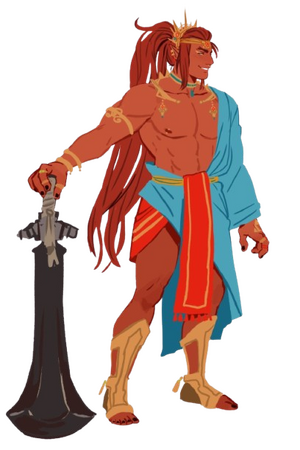
NAME → Kieran Blackmane
NICKNAMES → Kier (close family only) / The Last Hound (what other clans call him when they think he can't hear)
AGE → 28
BIRTHDATE → xxxx/11/03
GENDER → Male (he/him)
HEIGHT/WEIGHT → 6'2" (188 cm) / 195 lbs (88 kg)
SEXUAL ORIENTATION → Heterosexual
OCCUPATION → Witch Hunter / Blackmane Clan Enforcer (only active redmarked member)

PERSONALITY DESCRIPTION
Kieran knows what he is. A weapon. He's not bitter about it, doesn't rage against the unfairness of being shaped into something with a single purpose. It's just fact. From the moment his eyes bled red at thirteen, his path narrowed to a single line, and he's walked it without complaint ever since. Some people might call him cold, but cold implies a lack of feeling. Kieran feels plenty. He just keeps it controlled, locked down, because letting emotions run wild makes the beast harder to manage, and managing the beast is the difference between functional and monstrous.

His loyalty doesn't attach itself to people the way it does for others. It fixes on function instead, on purpose, on the job that needs doing. He's learned to work with the beast inside him through practical cooperation rather than the brutal suppression most redmarked attempt. They've reached an understanding, him and the thing that shares his skin. It wants to hunt, to fight, to run. He gives it those things when he can. In return, it lends him its strength without trying to devour what's left of his humanity.

Being the last active redmarked Blackmane carries weight. He's irreplaceable, and everyone knows it. But Kieran doesn't spend time thinking about the pressure, about what happens if he breaks like the others did. He just keeps going. Keeps hunting. Keeps crossing into a world that actively rejects his existence because that's what he was made for. Duty isn't some noble burden he carries. It's the framework holding him together. Take away the mission and there's not much left.

BACKGROUND

Early Life
Kieran was born into the Blackmane Clan when the old blood had already started thinning. His mother, Rheva, sat on the Council of Mothers - stern, practical, devoted to the clan above everything else. His father was a capable warrior but not redmarked, and Kieran barely remembers him beyond a vague presence in his childhood.

What he remembers clearly is Mira.

His older sister was six years ahead of him and already marked when Kieran was still young enough to think it made her special rather than cursed. Her eyes bled red at twelve, and she became everything the clan valued. Strong, fearless, efficient. She protected Kieran, taught him to fight, and when his own eyes turned red at thirteen, she was the one who kept him from falling apart during those first brutal transformations.

"The beast isn't your enemy, Kier," she told him while he shook with the effort of keeping it contained. "It's part of you. Work with it, not against it, and you'll survive this."

She was right. While other young redmarked destroyed themselves trying to suppress the beast or dominate it into silence, Mira taught Kieran a different approach. Acknowledge it. Respect what it wants. Give it what it needs when possible. In return, it lends you its strength instead of fighting for control. It wasn't harmony - nothing about being redmarked is harmonious - but it was functional, and functional meant alive.

Training and Purpose
The Blackmane Clan had been hunting witch bloodlines for seven generations. The theory was simple: kill all the witches whose ancestors created the banishment curse, and werewolves could exist in the human world again. Whether the theory was correct didn't matter much anymore. Too many had died chasing it to turn back now.

Redmarked Blackmanes were the only ones capable of crossing into the human world to do the hunting. The curse that kept other werewolves out couldn't stop them completely, though it made them suffer for the intrusion. Physical pain, mental strain, the beast screaming constantly to leave. Every second in the human world cost something.

Kieran trained for it from the moment his eyes changed. Combat, tracking, killing, endurance work. They'd force him to stay in the human world until he was shaking and nauseous just to build his tolerance. His mother oversaw most of his training personally, never giving him softer treatment because he was her son. Mira went on missions and came back with lessons, sometimes with scars, always with that look that said she'd seen something she couldn't unsee.

An older redmarked named Garren took over Kieran's training once he started active missions at sixteen. Garren was in his forties, weathered by decades of crossing over, but still the best hunter the clan had. He taught Kieran the practical side - how to track witches through human cities, how to kill efficiently, how to manage the beast when everything in the human world was making it scream.

"The human world's going to try breaking you," Garren said, voice flat with certainty. "The pain, the wrongness, the way even the air feels like it's pushing you out. It makes the beast loud. Makes it want to transform, want to run home. You can't let it. Make it understand - we finish the job first. Then we leave."

First Blood
Kieran's first solo witch hunt at sixteen almost killed him. The Council decided he was ready after three years of training and dozens of missions as support. The target was a young witch living alone in Manchester. Should have been straightforward.

Everything went wrong.

The witch had wards he didn't detect. They triggered the moment he entered, sending pain through his nervous system. The beast panicked, tried to force a transformation. Kieran barely held it back. The witch fought hard, terrified but desperate to survive. His training was solid but this was different - real, messy, chaotic.

She caught him across the palm with a kitchen knife. The scar is still there. The pain snapped something into focus. The beast surged forward, not to transform but to help. Suddenly he wasn't thinking, just moving on instinct. The fight ended quickly after that.

He stood over her body afterward, hand bleeding, shaking from adrenaline and the aftermath of nearly losing control. The beast was screaming to leave. But he forced himself to stay, to search her apartment for information, to complete the mission properly.

When he reported to the Council, his mother looked at the blood on his clothes and the crude bandage on his hand. "Complete?"

"Yes."

"Good. Clean yourself up. We'll hear the full account in an hour"

No congratulations. No comfort. Just acknowledgment that he'd done the job. That was when Kieran understood what his life looked like now. This was his function. This was everything.

That night he opened the small leather journal he'd bought before the mission and wrote the first entry. First name on what would eventually become a very long list.

Learning Control
At twenty-one, Kieran made his biggest mistake - taking a mission during a full moon. Five years into hunting by then, confident in his control, convinced he could handle the extra strain. The Council approved it because they needed a specific target eliminated.

The kill went fine. Then the full moon rose while he was still in the human world.

The beast, which had been cooperative, suddenly became overwhelming. The full moon amplified everything - the pain, the desperation to transform, the feeling of wrongness. His control started slipping.

He made it to an extraction point but couldn't cross back. The beast was too loud. If he tried shifting forms to pass through the barrier, he might not stop the transformation. Might go fully monstrous.

Six hours. He spent six hours in an abandoned warehouse, locked in internal battle with the beast. Every moment it got louder. Transform. Run. Leave.

Kieran didn't try suppressing it. He talked to it. Not with words, but with intention, with understanding.

"I know. This place hurts. I know you want to leave. I want to leave too. But if you take over, if you transform here, we become like Garren did. Someone will have to kill us. I don't want to die. You don't want to die either. We survive this together, or we don't survive at all."

The beast didn't calm down. But it listened. For the first time since his eyes turned red, Kieran felt like they were actually communicating instead of just fighting for control.

When the moon finally set enough for the pressure to ease, he crossed back over. Went straight to his quarters and didn't come out for two days. The Council noted the delay but didn't question it. Target was dead. Mission complete.

Mira found him on the third day. "Full moon?"

"Yeah."

"You held?"

"Barely."

She sat with him in silence for a while. Then: "You're stronger than you think, Kier. But don't test it like that again. The beast isn't something you beat. It's something you survive."

Kieran never took missions during full moons again unless absolutely critical. That night taught him where his limits actually were.

Loss of Garren
When Kieran was nineteen, Garren went on a routine mission and didn't come back on schedule. The Council sent Kieran to find him.

Three days of tracking led to an abandoned factory outside Manchester. Kieran found what was left of Garren there. Fully monstrous. That nightmare transformation where the beast wins so completely that the human consciousness just stops existing. Garren had decades of experience, had survived hundreds of crossings, and it still wasn't enough.

Kieran tried once. "Garren. It's Kieran. Come back."

Nothing. Just the beast looking out through red eyes that didn't recognize him anymore.

The fight was brutal. Garren had taught Kieran everything, which meant Kieran had to use all of it just to survive. When it ended, he stood over his mentor's body and understood something fundamental about being redmarked. Even the best break eventually. Even decades of experience won't save you. They're all on borrowed time.

He brought the body home. The Council listened to his report. "He was gone," Kieran told them. "I ended it."

His mother nodded once. "You did what was necessary."

Kieran grieved. He acknowledged the loss, honored what the man had taught him, participated in the funeral rites. Then he moved on. The lesson was too clear to ignore - maintain control always, because losing it means death.

The Quiet Kill
Not every witch hunt was violent. Some were just sad.

At twenty-four, Kieran was sent to Dublin to eliminate a witch who worked as a librarian. She had minimal magical ability, barely registered as a witch. But she was part of the bloodline, and the Council's orders were absolute.

He tracked her for three days, then entered her apartment while she was at work. While he waited, he looked around. Books everywhere. Half-finished jigsaw puzzle. Photos with friends. A cat hiding under the bed. Evidence of a quiet, harmless life.

When she came home, she saw him immediately. Didn't scream. Just went very still.

"You're here for me."

"Yes."

"Because of my family name."

"Yes."

She was quiet for a moment. "I barely have any magic. Never hurt anyone. Didn't even know about the curse until my brother told me before he disappeared. I'm guessing you killed him too."

"Three months ago. Edinburgh."

She nodded slowly, sat down in her armchair like her legs wouldn't hold her. "Will it hurt?"

"No."

"That's kind of you." She looked at her cat. "Will you take Morrigan to the shelter after? She's friendly, someone will adopt her."

Kieran hadn't expected that. "Yes."

"Thank you."

She closed her eyes. Kieran made it quick.

Afterward, he sat in that apartment longer than he should have. The cat came and sat near him. He'd killed forty-one people by that point. This was the first one who'd thanked him for doing it.

He took the cat to a shelter before leaving Dublin, like he'd promised. When he crossed back over, his mother asked for the mission report. "Target eliminated," he said. Didn't mention the conversation. Didn't mention the cat.

But he still thinks about her sometimes. Wonders if accepting death with that kind of grace was strength he doesn't have. Wonders what his life would look like if he were free to just exist quietly the way she had. Wonders if the cat found a good home.

Mira's Final Days
Three days before Mira left for her last mission, she found Kieran training in the clan grounds. She watched him work through combat forms before speaking.

"You ever think about what comes after?"

Kieran paused. "After what?"

"After the curse breaks. After the last witch is dead. After the mission is complete."

"No."

Mira smiled, but it looked sad. "Yeah. Me neither. Used to, when I was younger. Thought maybe I'd travel, see the parts of the human world that don't hurt to exist in. Maybe find a mate, have kids, live something like a normal life." She sat down, gestured for him to join her. "But that's not going to happen."

"You don't know that."

"I do, Kier. I've been doing this for fifteen years. I'm tired in a way sleep doesn't fix. The beast is getting harder to work with. Sometimes I hear it even when I'm here, safe in our realm, just whispering in the back of my head. Wanting things I can't give it anymore."

Kieran didn't say anything. He could see it - the way she moved now with slight hesitation, the way her eyes stayed red more often even when she was home.

"You're better at this than I am," Mira continued. "You figured out how to coexist with the beast faster. More efficient, more controlled. You're going to outlast me by years."

"Mira, don't-"

"Listen." She turned to face him fully. "When I break, and I will, you can't hesitate. You understand? When the beast wins completely, the person is gone. All that's left is something wearing their face. You put it down fast and clean."

"I know."

"And you don't feel guilty about it after. The me that you know, the sister who taught you to fight, who helped you through your first transformation? That person will already be dead before you find me. You'll just be cleaning up what's left."

Kieran met her eyes. Red looking at red. "I understand."

"Good." She stood up, stretched. "One more thing. When you write my name in your journal, because I know you keep that list, don't put how I died. Just that I died on mission. Let the clan remember me as functional, not as something that had to be put down."

"The journal is just for me. No one else sees it."

"Then let you remember me as functional."

Three days later she left for Prague. Four days after that, the Council sent Kieran to end what she'd become.

Loss of Mira
The Council called him in. His grandmother Saskia delivered the news. "Your sister has lost control. She's in the human world. Fully gone. You need to bring her back, or end her."

His mother stood beside Saskia, silent. Her face was stone.

"She's my sister," Kieran said.

"She's gone," Saskia said firmly. "You know what monstrous means. You saw it with Garren. There's no bringing them back."

He knew. Once the beast wins completely, the human side isn't fighting to resurface. It's just gone.

Finding Mira was easy. She'd left a trail of destruction. Facing her was harder. She'd been his protector, his teacher. Looking at her now - massive, wrong, glowing with that horrible red light - felt like looking at a desecration.

He tried once. "Mira. It's Kier."

For just a second, her eyes focused on him. He thought, maybe-

Then the beast surged and she attacked.

The fight was worse than Garren because Kieran kept pulling his strikes, kept trying to subdue instead of kill, kept hoping she'd come back. She nearly killed him twice. Finally he made the choice. His sister was already dead. What remained was just the beast wearing her body.

He chose mercy.

Bringing her body home broke something in his mother that he'd never seen break before. The Council of Mothers stood in grim silence. Mira had been destined for leadership eventually, a woman with the redmark, the rarest and most valuable combination. Now she was gone. Now Kieran was the last active redmarked Blackmane left.

His mother didn't blame him. She seemed proud that he'd been strong enough to do it, even while grief tore her apart.

The clan held funeral rites. Kieran participated, said the proper words, burned the traditional offerings. He mourned genuinely. Mira had been important to him. But mourning doesn't change reality. She'd lost control. He'd ended it. Those were just facts.

After Mira's death, Kieran's focus on control became absolute. If his sister could break - and she was better than him in every measurable way - then he absolutely could too. So he maintained his cooperation with the beast like his life depended on it. Because it did.

He also became aware that he was now the last weapon the clan had. There were older redmarked Blackmanes still alive, but age and damage had worn them down past usefulness. Kieran was it. Twenty-five years old and irreplaceable.

The Council's Charge
After Mira's death, the Council called Kieran to formal meeting. All seven Mothers present. His mother and grandmother among them.

Saskia spoke for the Council. "You understand your position."

"I'm the only one left who can cross over."

"Yes. The older redmarked are beyond active service. No new redmarked have manifested in the younger generation. You are singular."

His mother continued. "We've been hunting the witch bloodlines for seven generations. We're close to the end. Based on our information, there are only a few families left."

"You want all of them dead."

"We want the curse broken," Saskia corrected. "The witches' ancestors banished all werewolves from the human world. We've operated on the theory that eliminating the witch bloodlines responsible will break that curse. We need to know if the theory is correct."

Another Mother leaned forward. Vera, old and scarred from her own time as a warrior. "We're asking you to complete what seven generations of redmarked have worked toward. Asking you to finish this."

Kieran looked around the Council chamber. Seven women watching him with varying expressions. Expectation. Hope. Resignation.

"And if it doesn't work?" he asked. "If I kill them all and the curse remains?"

Silence stretched out.

Finally, Saskia spoke. "Then we'll know for certain. And we'll find another way. But we have to eliminate all possibilities first."

"How long do I have?"

"As long as you need. But Kieran-" His mother's voice carried weight now. "We know the cost of what we're asking. We've watched Garren break. We've watched Mira break. We know you're walking the same path."

"I can handle it."

"For now," Rheva said quietly. "But this is likely your last mission series. After this, even if you survive it, you'll probably be too compromised for further active service. We're burning you out to finish this. You understand that?"

Kieran understood. They were spending their last functional weapon to complete a mission generations in the making. Once he was done, or once he broke, there would be no more witch hunting unless new redmarked manifested.

"I understand."

Saskia stood. "Then we give you this charge: End the witch bloodlines. Break the curse. Come home when it's finished."

Current Status
Over the past two years, Kieran has been systematically working through the remaining witch families. He's killed dozens. Added dozens of names to his journal. He's getting close to the end now. Close to finding out if seven generations of sacrifice and suffering actually meant something.

He knows he's on borrowed time. Garren lasted until his forties. Mira made it to thirty-four. Kieran is twenty-eight and has been doing this for twelve years. Best case scenario, he's got maybe five more years before the accumulated damage breaks him.

He doesn't think about it much. Just another fact to file away and ignore until it's relevant.

The Council is waiting for him to complete the mission. His mother is waiting. His grandmother is waiting. Everyone who died getting the Blackmanes this far is waiting.

Kieran just keeps going. Keeps hunting. Keeps crossing into a world that rejects him. Because that's what weapons do. They function until they break.

LIST OF SKILLS
→ Witch Hunting → Twelve years of tracking and killing witches makes Kieran one of the most effective hunters the Blackmanes have ever produced. He knows how to identify their magic, how their defenses work, where they hide, how they think. More importantly, he knows how to kill them efficiently and get out before anyone notices. It's not pride. Just accumulated experience.
→ Combat Mastery → The clan's been training him to fight since he was old enough to throw a punch. Hand-to-hand, bladed weapons, improvised weapons, fighting dirty when necessary. He's killed other werewolves, witches, and things most Blackmanes never encounter. His style is practical rather than elegant. Brutal when it needs to be. The goal is always to end it fast.
→ Beast Cooperation → Most redmarked spend their lives trying to suppress the beast or dominate it into submission. Kieran works with his instead. He understands what it wants, what it needs, how to negotiate when their goals don't align. This makes his transformations smoother and his control more stable than most. The beast lends him strength, instinct, heightened senses. In return, he gives it the hunt. It's not friendship. It's functional partnership.
→ Pain Tolerance → Twelve years of crossing into the human world builds tolerance the hard way. The human world rejects werewolves on a fundamental level. Existing there is constant low-grade agony that gets worse the longer you stay. Kieran can function through pain that would drop other wolves because he's had to. Because the alternative is failing the mission, and failure isn't an option.
→ Tracking → Even in human form, his senses are sharper than they should be. Add years of training and the beast's instincts feeding him information, and Kieran can track someone through a crowded city or empty wilderness with equal efficiency. He picks up on scents other people miss, patterns in behavior, the small details that reveal where someone's going or where they've been.
→ Human World Navigation → Twelve years of missions means he knows how to move through human society without drawing attention. Understands their technology well enough to use it. Knows their social customs well enough to blend in. Can pass as human for extended periods when necessary, though it's exhausting in ways that have nothing to do with the physical pain of being there.
→ Crisis Management → Things go wrong. Plans fall apart. Targets fight back harder than expected. Kieran's gotten good at handling situations as they deteriorate. Emergency first aid. Extraction under pressure. Reading when a situation's about to go catastrophically sideways. Improvising when the original plan is dead and burning. All learned through trial and error, mostly error.
→ Intimidation → There's something about Kieran that makes people instinctively wary. Maybe the red eyes. Maybe the way he moves, too controlled, like violence on a leash. Maybe just the aura of someone who's very good at killing and doesn't particularly care about doing it. He can use this when he needs to, though he doesn't enjoy it. It's just another tool.
→ Interrogation → Sometimes you need information before you kill the target. Kieran knows how to extract it. Not through torture - too messy, too unreliable, too time-consuming. Through reading people instead. Understanding what they're afraid of, what they want, what they'll trade information for. Most people will talk if you ask the right questions in the right way.
→ Magical Awareness → Twelve years hunting witches teaches you to recognize magic when you encounter it. Kieran can't use magic himself, but he knows the signs. The feeling of it in the air. The way reality bends slightly around active spells. How to identify what kind of magic someone's using and roughly how dangerous it is. It's saved his life more than once.

TRIVIA
→ His eyes aren't always red. Normally they're dark amber-brown, almost ordinary. The red bleeds through when he's emotional, when the beast is close to the surface, when he's in pain. In the human world they're red more often than not because existing there hurts constantly and pain brings the beast closer. Other Blackmanes can tell how much he's struggling by how red his eyes are running. He's learned to hide most signs of strain, but the eyes give him away.
→ Keeps a small leather journal where he records every witch kill. Name, date, location, method. Not pride. Not guilt either. Just documentation. Proof that the mission is progressing. He's killed forty-three witches over twelve years. The list keeps growing.
→ Three scars matter more than the others. One across his ribs from Garren's claws when he was fighting to put him down. One on his shoulder from Mira's teeth during their fight. One across his palm from his first solo witch hunt at sixteen when everything went sideways and he barely made it out. The rest are just... there. Proof he's survived this long.
→ Sleeps light and wakes fast. Years of missions where sleeping too deeply meant dying taught him that. He can function on maybe three hours of sleep for days if he has to, though it makes controlling the beast harder. Sleep deprivation lowers inhibitions, weakens the cooperation he's built. He tries to sleep when he can. Doesn't always succeed.
→ Doesn't form attachments easily. Not because of trauma or fear. It's just not functional. People die. Missions come first. Caring too much makes the job harder. He cared about Garren and Mira. When they died he grieved and then moved on because that's how grief works when you're practical about it. Wallowing doesn't bring anyone back.
→ The beast gets louder during full moons. Not uncontrollable, but definitely harder to work with. More demanding. More present. He avoids being in the human world during full moons when possible because maintaining their cooperation takes significantly more effort when the moon's full. The one time he got stuck there during a full moon, he spent six hours locked in a warehouse fighting to keep control. He won. Barely. Never wants to do that again.
→ Doesn't seek out music. Finds most of it distracting. When he's in the human world and needs to blend into background noise in cafes or bars, whatever's playing is just that. Background. White noise. He doesn't pay attention to it. At home, he prefers silence.
→ Can cook basic survival meals but has zero interest in cooking as a concept. Food is fuel. He eats efficiently and moves on. Taste barely registers. Someone once asked him what his favorite meal was and he genuinely couldn't answer. Food is just food.
→ Has killed forty-three witches personally over twelve years. Knows the exact count. If the mission succeeds and he kills the last remaining targets, the witch bloodlines will be extinct. Then they'll find out if his mother has been sending him into hell for something that actually matters or if the whole theory was wrong from the start.
→ His mother has never told him she's proud of him out loud. Doesn't need to. The fact that she keeps sending him on missions is proof enough. If she thought he was compromised, failing, breaking like the others, she'd pull him back. She hasn't. That's all the approval he needs or wants.
→ Knows he's on borrowed time. Statistics don't lie. Garren lasted until his forties. Mira made it to thirty-four. Kieran is twenty-eight and has been doing this for twelve years. Best case scenario, he's got maybe five more years before the accumulated damage breaks him. He doesn't think about it much. Just another fact to file away and ignore until it's relevant.
→ Other werewolf clans call him "The Last Hound" when they think he can't hear. Not respect exactly. More like acknowledgment. He's the last functional redmarked the Blackmanes have. When he breaks, the witch-hunting mission probably ends unless someone new manifests red eyes. He's heard the nickname. Doesn't care enough to be bothered by it.
→ Carries a silver knife that used to be Mira's. Silver kills werewolves, which makes it the closest thing to a mercy he can carry. If he ever goes fully monstrous, whoever finds him will need a silver blade to put him down. Practical to carry his own. The knife also works fine on witches, so it serves double duty.
→ His grandmother Saskia is the oldest living Blackmane at seventy-six. She was alive during the last generation of redmarked, before Kieran's. She knows things about clan history that she doesn't share. Sometimes Kieran catches her looking at him with something that might be guilt or resignation or both. He doesn't ask what she's thinking. Not his business unless she decides to make it his business.
→ The curse of banishment means werewolves can't exist in the human world. Regular wolves literally cannot cross the barrier between realms. It repels them absolutely. Redmarked Blackmanes can force their way through, but the human world actively rejects them once they're there. Like existing somewhere your body knows you shouldn't be. Constant wrongness that gets worse the longer you stay. The beast fights harder to transform and escape the longer they remain.
→ Crossing between realms takes physical toll every single time. There are thin places where the barrier is weaker, where crossing is marginally easier, but it still feels like being turned inside out for a few seconds. Kieran's done it hundreds of times over twelve years. Still hates it. Always will.
→ Has never been in a relationship. Hookups occasionally when the need gets pressing enough. Physical release, simple and uncomplicated. But nothing that requires emotional investment or long-term planning. The mission comes first. Always has. Besides, what's the point of getting attached when statistics say he's likely to go monstrous in the next five years? Better to keep things simple.
→ The beast inside him has opinions about things. Strong ones sometimes. It hates the human world with visceral intensity. Doesn't trust most people. Saw Mira as pack, and when Kieran had to kill her, the beast raged for days afterward. He and the beast don't always agree on things, but they've learned to negotiate. The beast wants to hunt, wants to fight, wants pack bonds and territory. Kieran gives it hunting and fighting. Pack bonds aren't really an option anymore. Territory is whatever ground they're standing on at the moment.

LIKES

+ efficiency + clear objectives + silence + familiar routines + the moment a mission is complete + crossing back home after time in the human world (the relief is physical, immediate) + those few seconds right after a kill when everything goes still and certain + practical solutions that actually work + being left alone to do his job + the feeling of the beast settling after a good hunt + knowing exactly what's expected of him + dawn, because it means he survived another night +

DISLIKES

- the human world in general (necessary but awful) - full moons while on mission (control gets significantly harder) - uncertainty, because it makes planning impossible - people wasting his time with emotions when there's work to be done - being treated carefully because he's "the last one" (he knows, doesn't need reminding) - witches who fight back (just makes everything messier and longer) - questions about his sister (she's dead, what else needs saying) - the way his mother looks at him sometimes, like she's waiting for him to break - magical healing (feels wrong, makes the beast agitated and unpredictable) - being injured (can't work efficiently, vulnerable) - the concept of "what comes after the mission" (there is no after, just the next mission) -

Used In
The Last Hunt (Active) |
 
Last edited:

Users Who Are Viewing This Thread

Back
Top Bottom